
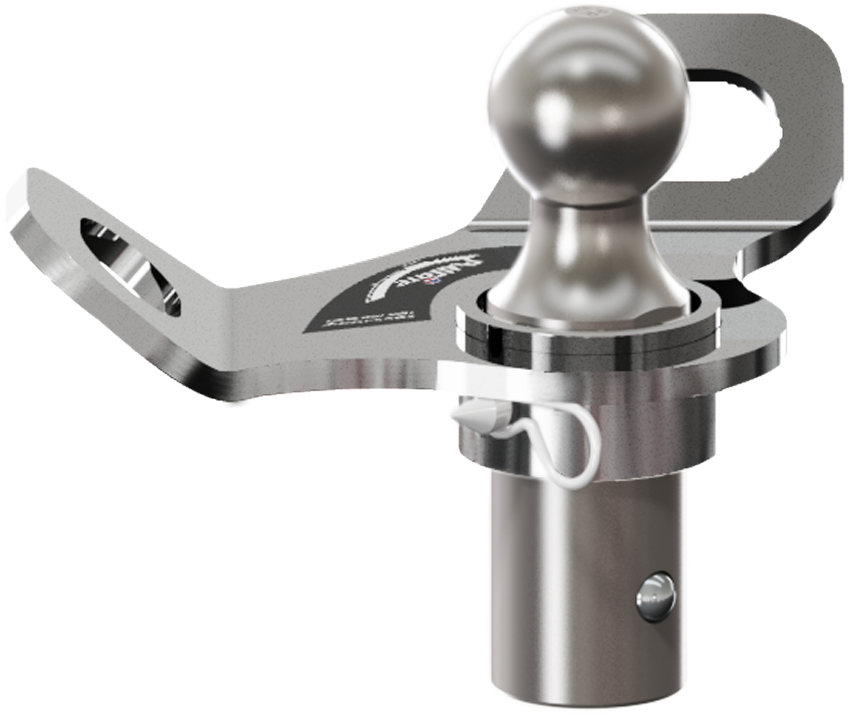
The gooseneck ball looks like a small part. It isn't. It's the first and only connection between your truck and your trailer, so it has to be reliable, well made, and built from the right materials. When truck makers started offering factory tow-prep packages, those underbed systems got popular fast. They keep the bed clear when you aren't towing by using four mounting points and a center socket. We weren't the first to build a gooseneck ball for one of those single-point systems, and that turned out to be useful. We got to watch the market, listen to RVers, and learn what was going wrong in the field before we designed ours.
What Was Going Wrong With Other Balls
Three problems kept coming up. The opening on top of most balls let dirt and debris fall into the locking mechanism, and over time that made the lock fail. The ball would freeze into the factory socket from cold weather or corrosion, with no good way to break it loose. And the ball could be stolen. We set out to fix all three.
No Opening On Top Of The Ball
This is the big one. Nearly every other gooseneck ball has a lock that you operate from the top, through a shaft or hole that runs the full length of the ball. The top of a ball lives a hard life. It catches dust, weather, and moisture, and once you grease it for towing, organic gunk sticks to it. If there's a hole running top to bottom, that gunk has a straight shot into the works.
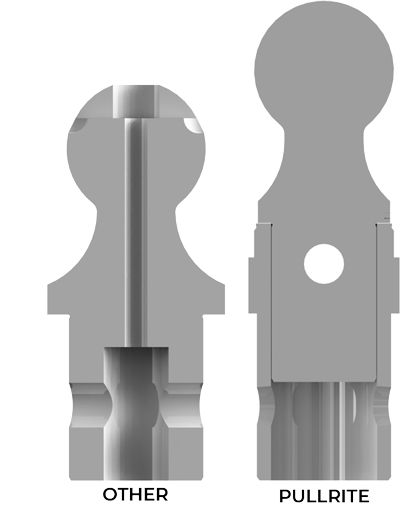
Our OE (original-equipment, meaning the factory puck system) Gooseneck Ball is patented with no opening on top. You lock it by twisting the ball itself, which engages the lock down inside the Gooseneck Ball Post. Debris has nowhere to go. When it collects on the surface, you wipe it off and the ball is clean and working.
A Solid Ball, Not A Hollow One
Because the lock lives in the post instead of the ball, the ball can be solid. Ours is a solid, zinc-plated piece of steel: durable and corrosion resistant. Most other designs put a plunger-type lock on top and drill straight down through the center, which leaves them with a hollow ball. A solid ball gives your rig a stronger piece of metal to hang on. Ours is tested to exceed the SAE J2638 standard, the industry strength test for fifth-wheel and gooseneck hitches.
Built To Resist Corrosion
Cutting off the openings keeps most moisture out, but metal-to-metal contact still drives corrosion on its own, so we engineered against it. The exterior is zinc-plated mild steel, which holds up against rust far longer than a chrome-plated ball.
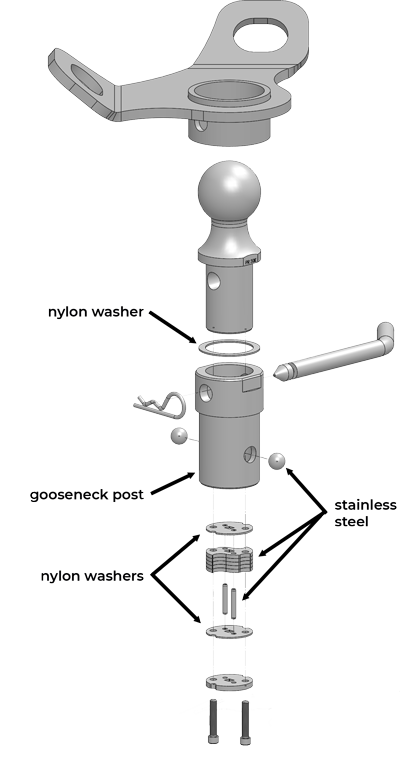
Inside, a mild-steel exterior touching stainless-steel parts would still corrode and bind. So we separated the dissimilar metals with nylon washers to keep them from touching. We even shaped the internal locking plates so they don't rub against the sides of the Gooseneck Ball Post or the end cap. Less contact, less binding, longer life.
A Theft Deterrent That Actually Works
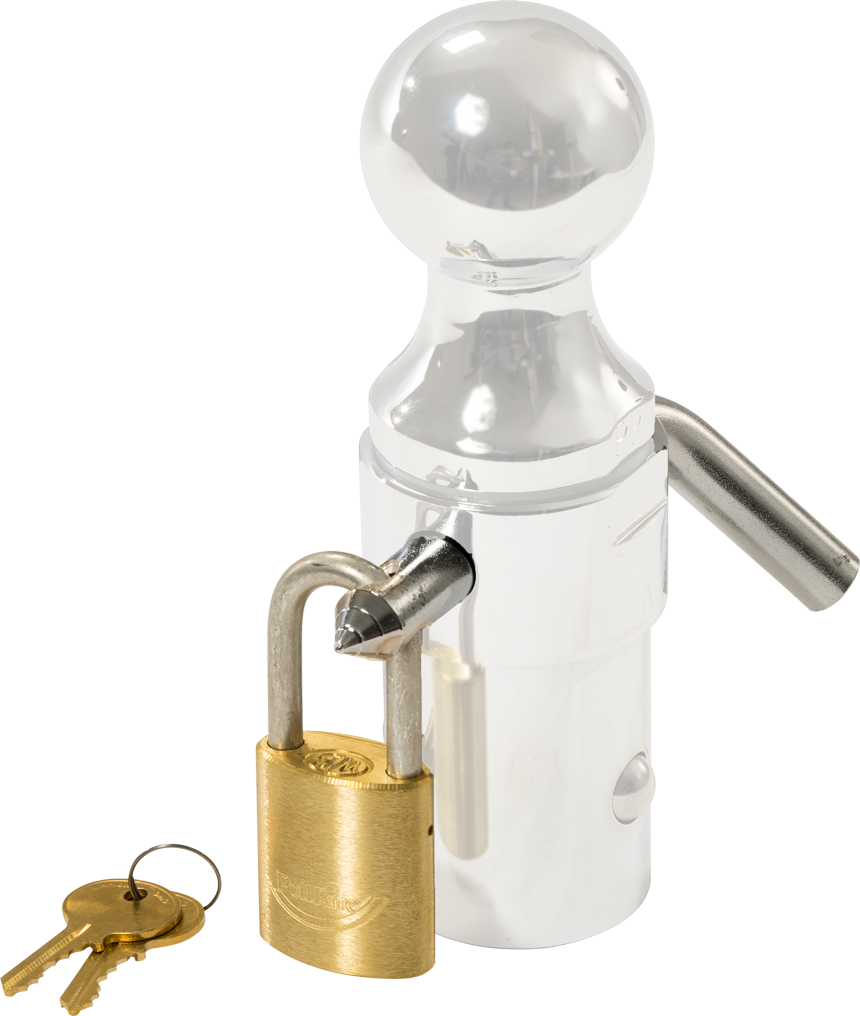
For the theft problem, the fix is simple and effective. A cross pin locks the ball mechanism into the puck socket, and you secure that pin with a padlock. As far as we know, it's the only gooseneck ball on the market you can lock down this way.
American-Machined Parts And Tight Tolerances
Our gooseneck balls are made in our own American factory, and that's a deliberate choice. Plenty of hitch brands are sourced from overseas, and most of them come from China. Building in-house lets us watch every tolerance and every machining step ourselves.
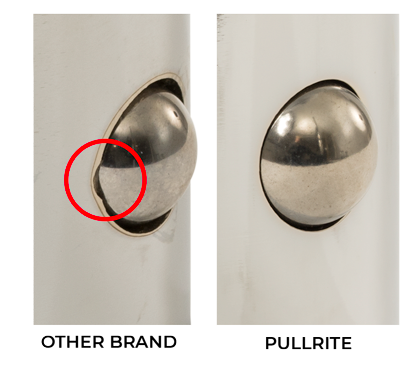
Here's a real example. The stainless-steel ball bearings in the gooseneck post have to be held in place. The fast, cheap way is staking: a manufacturer gouges out a small piece of metal over the drilled hole and bends it over the bearing, and that bent sliver is the only thing holding the bearing in. We didn't trust that. Instead we drill a cone-shaped hole into the wall of the post, which captures the bearing so it can't work its way out. We also machine our own stainless-steel plates to cradle the bearings and keep them sliding in and out smoothly when you turn the ball to lock it.
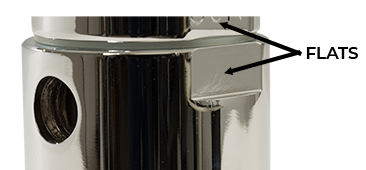
If a ball ever does bind up from freezing, debris, or missed maintenance, you aren't stuck. We machine flats into both the ball and the shaft so you can grab them with a pair of pliers. Turn the ball to work the lock, or turn the shaft to free the unit from its mounting point if it's lodged in the socket.
The OE Series Safety Chain Plate
Why have a chain plate at all? Safety. The safety chain's job is to limit how far a trailer can travel in your bed if it ever drops off the ball before you can stop.
Before factory puck systems, aftermarket underbed balls anchored the safety chain right over the ball, with just enough chain to attach. The new four-point (4P) systems changed that. Their anchor points sit out at the four bed-mount locations, away from the trailer's center attachment point. On a Ram factory tow package, those pucks sit a considerable distance from center. If you anchor there, a standard trailer chain usually isn't long enough to reach, so you're buying a longer chain and possibly welding or modifying the trailer to make it fit.
There's a real downside to anchoring out at the corners. The farther the chain sits from center, and the longer the leash, the wider the arc a dropped trailer can swing through, and the more chance it has to hit your cab, bedsides, or tailgate. An experienced RVer knows that if a trailer ever drops, slamming the brakes is the wrong move: it throws the trailer forward toward the cab. With the chain at the proper length and centered over the ball, even a panic stop is far less likely to let the trailer reach the cab or sides.
So we kept it simple and centered. Our OE Series Safety Chain Plate anchors the chain close to the ball where it belongs, and it uses the chains your trailer manufacturer already supplied. It's made from strong American steel and installs with just a pin and a clip. Newer isn't always better, and we think puck-mounted chain anchors are a case where the old approach is the safer one. The #4437 OE Series Gooseneck Ball comes with a Safety Chain Plate.
How We Test It
SAE International (the Society of Automotive Engineers) is a U.S.-based, globally active group of engineers, mostly in the automotive world. They write the test standards that protect both the consumer and the manufacturer. We run all our hitch products through dynamic and static loads to SAE requirements, which is how we arrive at a true, honest maximum tow capacity instead of a number we hope holds up.
Not every manufacturer tests to the same level. Many run static testing only. Our rigs do both. They apply static (up-and-down) loads plus dynamic loads in two more directions: horizontal side-to-side and longitudinal front-to-back. Each direction runs 300,000 cycles, for more than 900,000 cycles total. When you see our tow rating, that's what it survived.
Why Choose The OE Series Gooseneck Ball
Three features make the case on their own:
- No opening on top. Plunger-type locks gouge a channel down through the ball, and nothing stops dirt and water from reaching the mechanism. That's where corrosion and binding start. Ours has no path in.
- Corrosion engineered out. We keep dissimilar metals from touching, and where metal-on-metal contact is needed we use stainless steel and nylon washers, not plastic parts that turn brittle and crack.
- Lockable against theft. A cross pin and padlock secure the ball in the socket. We don't know of another gooseneck ball that does this.
The people who design and build these parts are RVers too. Their families ride behind these hitches, same as yours. If you're running a factory puck system, the OE Series Gooseneck Ball pairs with our OE-mount fifth-wheel hitches like the SuperGlide and Super 5th to give you a clean bed when you're not towing and a connection you can trust when you are.