
Rotational king pin boxes get sold as the easy fix for short bed fifth wheel towing. They do solve one problem. The trouble is they create a worse one. Here is what is really going on, why we don't recommend them, and what to do if you already own one.
The Real Problem: Cab-to-Axle Clearance
Short bed towing is hard because of the space between your cab and your rear axle. The center of the rear axle is the ideal spot to tow from. On a 5.5 foot bed truck, you only have about 20 to 27 inches between that axle and the back of your cab, and that is even after you account for a trailer with cutaway front corners.
Now do the math on a turn. Your trailer is roughly 96 inches wide, so the front corner swings out about 48 inches from the center pin. You are trying to fit that 48 inches of swing into 20 to 27 inches of clearance. There isn't enough room. Tow a super short bed with a standard fixed hitch and you risk hitting the back of your cab on even moderate turns.
Two products claim to fix this: a rotational king pin box, and an automatically sliding hitch.
How a Rotational King Pin Box Works
A rotational pin box moves the trailer's pivot point rearward, up to 22 inches behind the king pin. That extra distance buys back the clearance you were missing, so the front of the trailer no longer reaches your cab in a turn. So far, so good. It also keeps a relatively low pivot height, and a low center of gravity is a good thing for stability.
The problem is what that rearward pivot does to the way your trailer behaves on the highway.
Why Moving the Pivot Point Causes Sway
Think about a regular bumper-pull travel trailer. It hitches well behind the truck's rear axle, and that long lever is exactly why travel trailers are prone to sway. A fifth wheel avoids that. It pivots directly over the rear axle, which is the single biggest reason fifth wheels tow so much more steadily than a bumper-pull.
A rotational king pin box throws that advantage away. By pushing the pivot point up to 22 inches behind the axle, it makes your fifth wheel act like a bumper-pull. You get the sway characteristics of a travel trailer.
The Worst of Both Worlds
Here is the part the sales pitch leaves out. A fifth wheel sits high, so it has a high center of gravity. That is normally fine, because pivoting over the axle keeps it planted. A travel trailer has a low center of gravity, which normally fine helps offset its rearward pivot.
A rotational pin box gives you neither upside. You keep the high center of gravity of a fifth wheel and you add the sway-inducing rearward pivot of a travel trailer. It combines the bad half of each setup. That is unsafe trailer sway, reintroduced into a type of towing that was supposed to be free of it.
The Better Fix: An Automatically Sliding Hitch
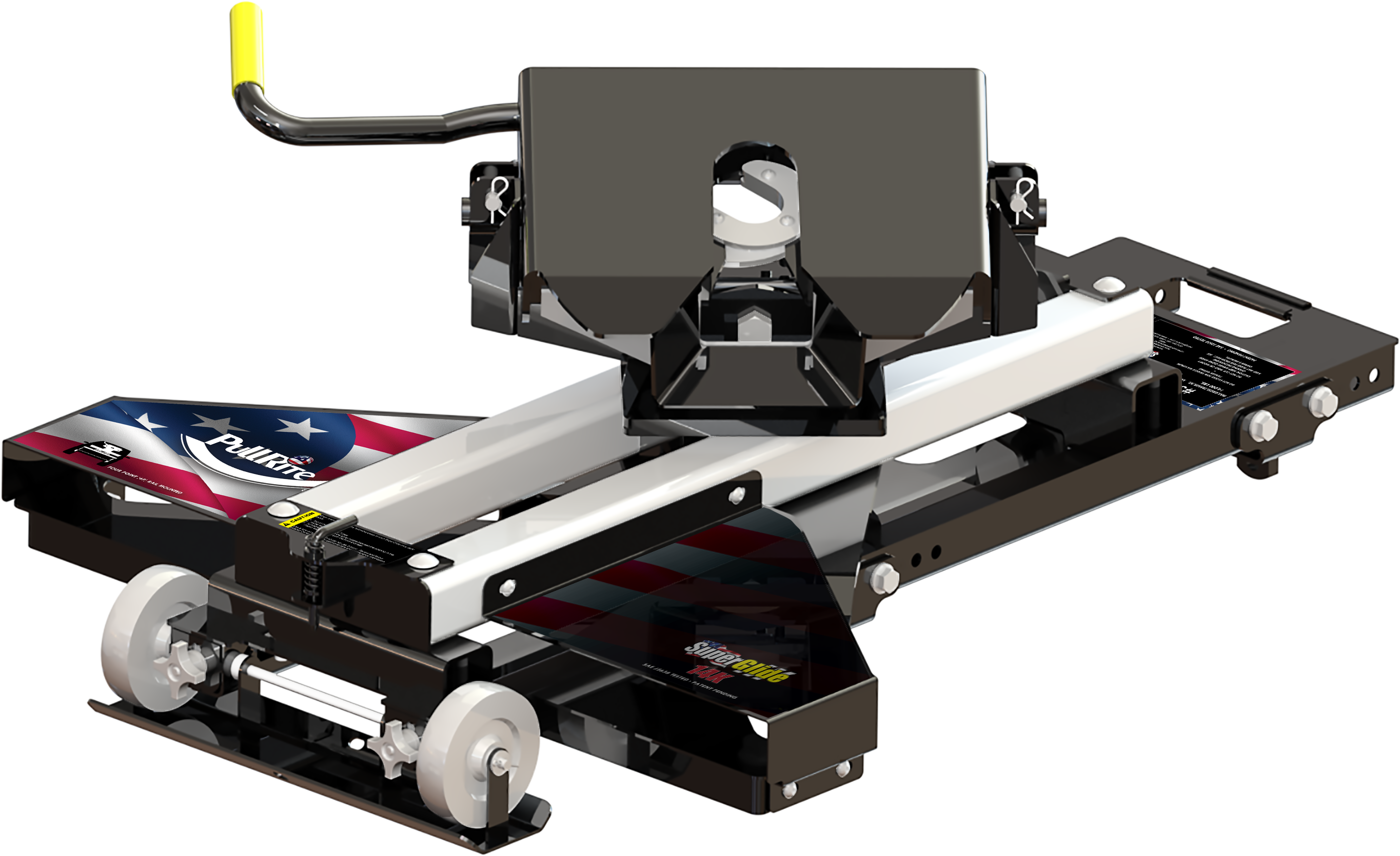
The real answer for short bed towing is a SuperGlide. Instead of relocating the trailer's pivot and inheriting sway, a SuperGlide moves the whole trailer away from your cab during a turn and brings it back when you straighten out. Your pivot point stays where it belongs, over the rear axle, so you keep the stable towing a fifth wheel is supposed to give you.
A SuperGlide slides the trailer 50% farther than manually adjusted "slider" hitches, and it does it automatically while you drive. There is no lever to pull, no remembering to set the slider before a tight turn. It reads the turn and gets out of the way on its own.
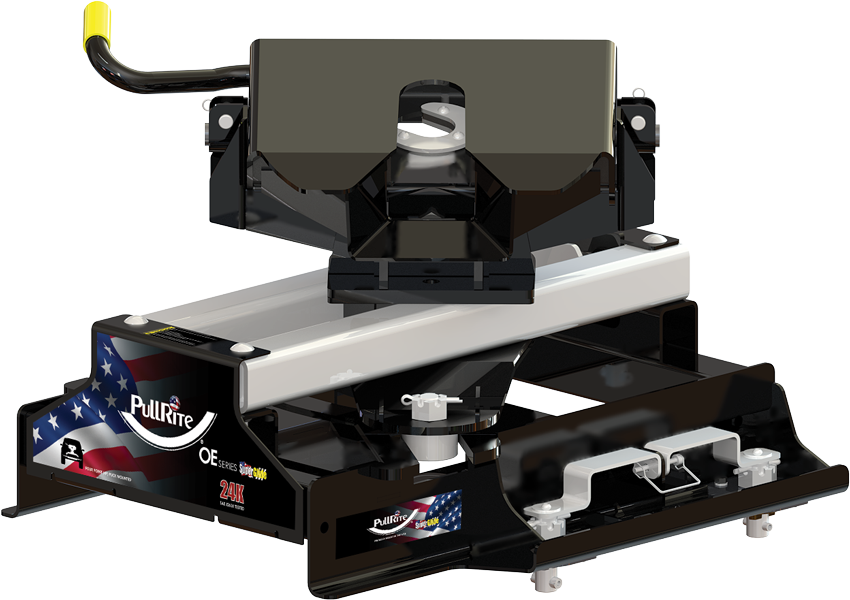
SuperGlide comes in several versions based on how you want it mounted, including models for Industry Standard Rails (ISR), factory OE puck systems (OE = original-equipment), and rail-mounted setups. If you tow with a super short 5.5 foot bed, two models are built specifically for that truck: the #3100 and the #3200 ISR SuperGlide.
If You're Going to Tow a Rotational Pin Box Anyway
Some folks already own a rotational king pin box and plan to keep using it. If that's you, here are the parts that help it work correctly with a PullRite hitch.
Super 5th Hitch: The #331724 Pin Box Wedge
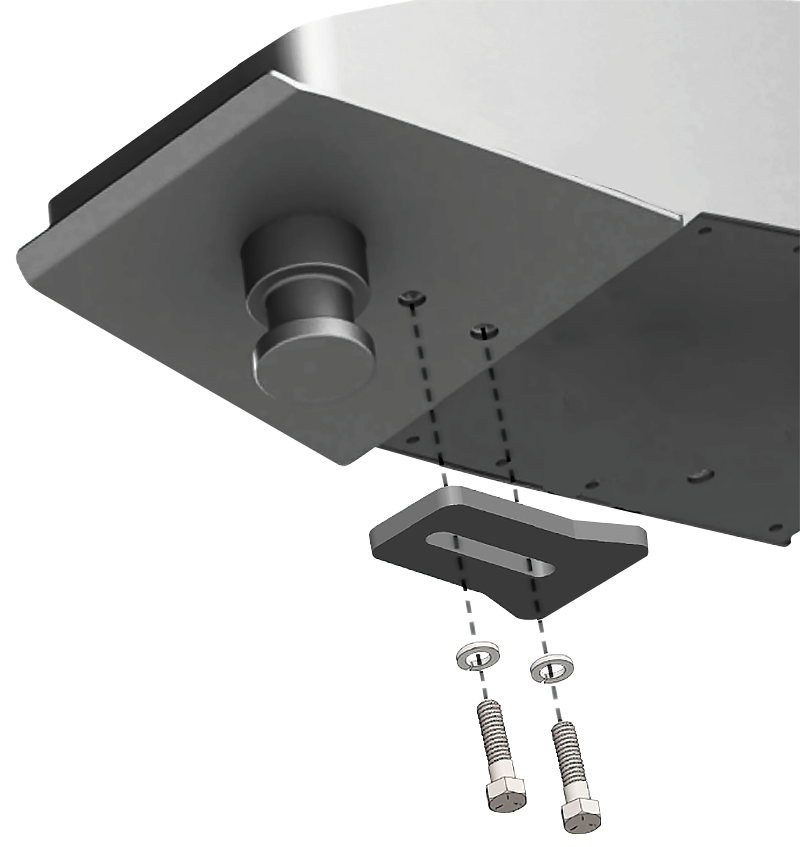
If you tow with a PullRite Super 5th and run a rotational king pin box from Turning Point, Sidewinder, or Orbital, our precision-fit #331724 Rotational Pin Box Wedge gives you the best towing performance with that combination.
Note: the #331724 wedge is not for use with the #1900 Super 5th.
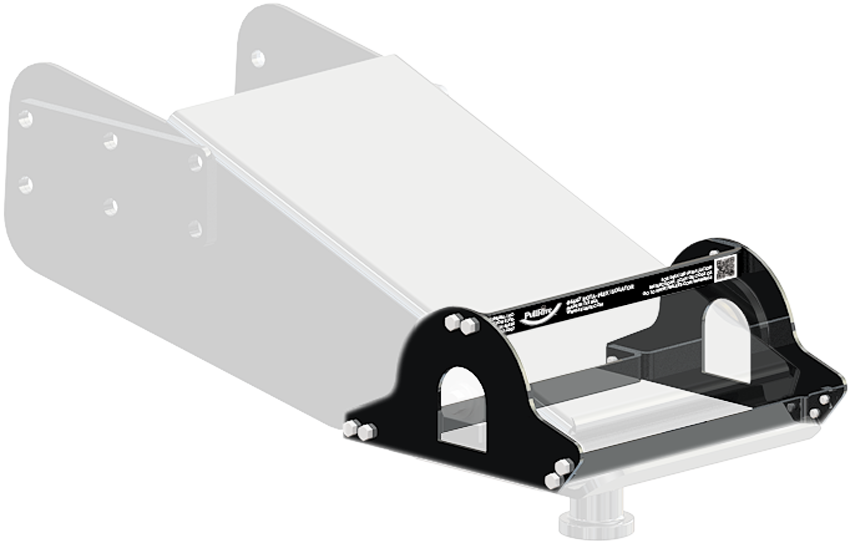
Rota-Flex Pin Box: The #4446 and #4447 Isolators
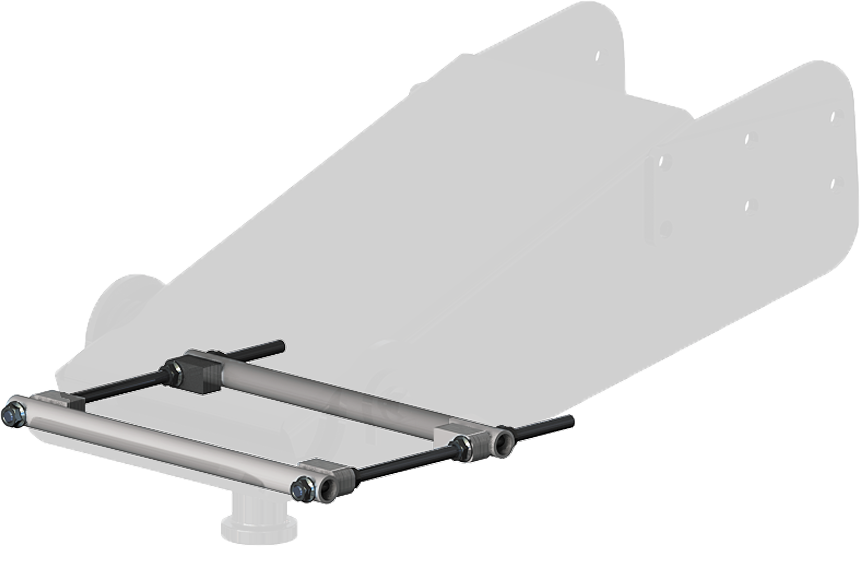
A Rota-Flex king pin box has a pivoting head with a built-in rubber block that cuts down on chucking and soaks up road shock. When it's paired with a SuperLite hitch, that rubber block can shift out of place while you tow.
- #4446 Rota-Flex Pin Box Rubber Isolator — use this to correct a rubber block that has already slipped out of position. It moves the block back where it belongs and secures it.
- #4447 — use this before you start towing as a preventive measure, so the rubber block doesn't slip out of place to begin with.
The Bottom Line
A rotational king pin box trades a turning-clearance problem for a highway-sway problem. For short bed trucks, an automatically sliding SuperGlide solves the clearance issue without giving up the stability that makes a fifth wheel worth towing. If you're committed to a rotational pin box, match it with the right PullRite wedge or isolator so it tows as well as it can.